There’s always a bit of a crash after a high, and I’m definitely feeling it now.
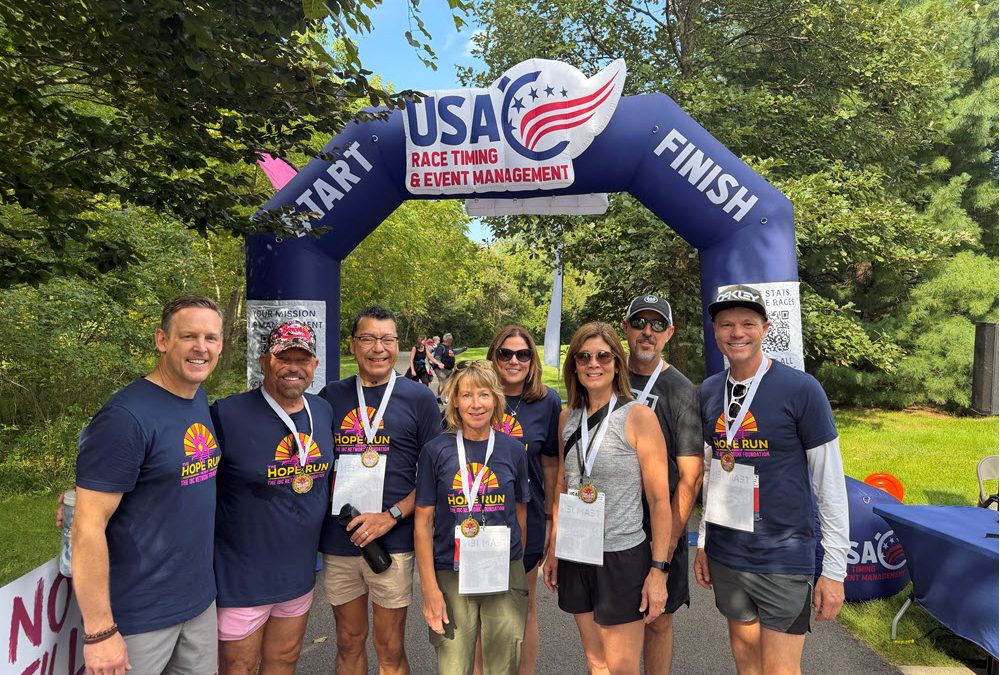
The inaugural Hope Run was a high.
Watching Jennifer, our board member and an IBC survivor herself, plan and execute such an excellent event was something I was incredibly proud to see. It was our very first run—a run that was for us and about us—and that made it especially meaningful.
We were so grateful for the staff who came from the hospital, for the family of Dr. Lori Gill Grennan, and for everyone who showed up to support us. But there was something else that happened that I found particularly encouraging: IBC survivors showed up whom we had never met.
In some ways, that is one of the best things that can happen.
It means our reach is extending farther than we realize.
But it also reminds me how much we want to bring those women into the fold. We believe there is power in our numbers. Power in our presence. Power in our stories.
And sitting on my back porch in Texas, feeling that little emotional crash after being part of something so magnificent, I keep thinking about my own family.
I’ve been processing what the Hope Run meant to the people who were there, and especially what I saw it mean to my daughter, Elizabeth, who came with her oldest daughter.
Elizabeth was only 17 when I was diagnosed with IBC. At the Hope Run, I was introducing her to some of my IBC sisters, and she was so excited.
“She hears about y’all all the time,” I told them. “She hears your stories.”
Then someone looked at her and I said, “This is my daughter. She was seventeen when I was diagnosed.”
Elizabeth is not someone who complains. She doesn’t often talk about what happened all those years ago.
But she looked at us and said, “It was awful.”
And then she burst into tears.
I think we all carry wounds from things that have happened to us. I think my family is doing okay. We are grateful for my wellness, and Elizabeth knows how much worse things could have been.
But I realized something in that moment.
These women were a safe place for her to finally say it.
She didn’t have to protect me. She didn’t have to minimize it. She didn’t have to be grateful for the outcome before she was allowed to acknowledge what it had been like.
She could simply say, “It was awful.”
And I knew exactly what she was remembering.
There was one particular evening during my treatment when I almost died. Elizabeth was the one who had to drive me to the hospital.
She doesn’t talk about it.
But standing there among women who understood, something in her needed to come out.
And I think there was a little healing in that moment.
That is the part of bringing people together that can be difficult to measure.
We can count the runners. We can count the money raised. We can count the miles and the participants and the cities.
But how do you count the moment when a daughter finally says out loud what she has carried for years?
How do you measure what it means for a child to run beside other children whose mother has cancer?
There were two children at the Hope Run whose mother has been diagnosed with IBC. I watched their determination to finish that race, and I thought about how empowering it must be for them to be part of something so positive—something they know is helping their mother.
That matters.
When I was diagnosed, it was difficult to have hope. And without hope, it is very easy to feel powerless.
I am not trying to blow smoke about this disease. I know how significant inflammatory breast cancer is. I know what it can take from families.
But I also know this:
There is something powerful about physically being together.
There is power in looking across a room and seeing someone who understands without having to explain.
There is power in our numbers.
There is power in our presence.
And there is power in our stories.
That is why I am so grateful to Jennifer for giving us this first Hope Run. And to her friends and family who helped make it happen.
I keep thinking about one little moment in particular.
A few days before the race, a windstorm had brought down a huge tree branch that was partially covering the path. At one point, I watched Jennifer’s husband, Chris, literally wrestle that enormous branch out of the way.
He didn’t want anyone to trip over it.
And I remember thinking about that symbolically.
Because isn’t that what we do for the people we love?
We move things out of their way.
Sometimes the thing in their way is a huge branch.
Sometimes it’s fear.
Sometimes it’s isolation.
Sometimes it’s an old wound that has never had a safe place to be spoken.
We can’t remove everything that stands in the way. But we can stand beside each other. We can make the path a little clearer.
And sometimes, I think, simply being there together can begin a healing that reaches much farther than we ever imagined.
I’m looking forward to hearing from the people who attended the Hope Run, and from those who participated virtually from all over the country. I want to know what they felt. What they experienced. What they carried home with them.
Because this was only the beginning.
We want the Hope Run to become a national event, with people gathering in communities all across the country.
We are beginning the application process on our website for people who want to host a Hope Run in their own communities.
Because there is power in our story.
There is power in our numbers.
And there is power in simply showing up for one another.
Sometimes, we have no idea how far the ripple will travel.